Sunday, 21 February 2016

Regrow Pak Choi

Pak choi is a delicious, versatile vegetable that is a great plant-based source of calcium. I love to regrow pak choi at home on my windowsill because it helps reduce food waste - you can just cut the leaves you need as and when you need them. It also reduces the amount of unrecyclable plastic packaging I have to buy, and eliminates a few food miles too. Basically it's pretty good for the environment. It's practically free, very satisfying, and fun to do. Here's my simple guide to growing your own:


I like to reuse old houmous and Vitalite tubs, but you can use teacups, plant pots or whatever you have to hand. If you have enough room or a garden you can plant the bottoms in soil after several days and the new leaves will grow even bigger. Happy regrowing!

Wednesday, 5 August 2015

Tackling the roots

Following on from my previous article about "victories" in single issue campaigning, I think it's useful to try to understand why these kinds of campaigns are so popular. One reason, perhaps, is that the scale of animal industry is so enormous that the task of abolishing it can be rather overwhelming. This can make vegans, who are up against a vast majority of non-vegans, feel powerless about any kind of change. Breaking the issue down into smaller, more manageable campaigns, might give some people hope; short-term, achievable goals can help you feel like you're making progress and therefore "doing your bit" to help animals.

Unfortunately, singling out a particular form of animal use perpetuates speciesism, which is the root cause of animal exploitation. It is the equivalent of dealing with weeds in a garden by clipping back a few leaves, celebrating the progress you've made in weed control and telling everyone in the world about it. During which time, the leaves are beginning to grow back, slowly but surely, perhaps in the same place, perhaps even more vigourously than before. The next thing you know, there's a whole weed back with a vengeance. Now, do you continue to do the same as before? Or do you step back, realise your mistake, and find an alternative?


If more animal advocates promoted veganism as the moral baseline, and as the minimum we can do to help animals, we would see a much greater cultural shift towards veganism, greater reduction in animal use and, eventually, the abolition of industrial animal use. Sadly, it feels like many vegans insist on continually clipping the leaves, I guess to put in their dandelion tea after a hard day protesting.


Monday, 3 August 2015

GIVEAWAY

I have some great news to start this month off with: The Illustrated Vegan is now being featured on VegFest Express - a blog dedicated to showcasing the latest vegan news, blogs, recipes and more, run by the organisers of VegFestUK.

Now onto the fun bit. As well as being featured on the blog, the lovely organisers have given me 2 free weekend passes for the VegFestUK London event (Oct 10th 11th at Olympia Central) to give away to one lucky winner! All you have to do is make sure you're following me, @IllustratedVeg, on Twitter, and retweet this tweet:

The competition closes midnight (GMT) on Sunday 30th August. One lucky winner will be drawn from a hat on Monday 31st August. Good luck!

Saturday, 27 June 2015

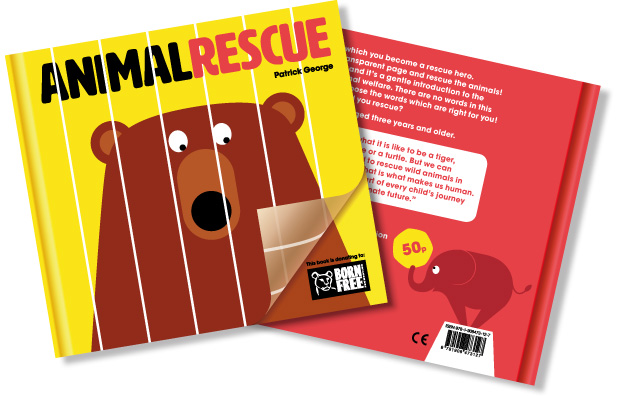
REVIEW: Animal Rescue, by Patrick George

Animal Rescue is a mostly wordless novelty picture book by illustrator Patrick George. Printed double-sided acetate pages sandwiched between regular paper pages allow for a game to be played as the reader opens each new spread. The acetate naturally falls on the right hand page, each time showing animals (or, in some cases, their body parts) in distressing or abusive situations. The reader is invited to turn the plastic page and the act of doing so places the animals in much more pleasant environments on the left hand page. You can try it out for yourself on Patrick George's website here.


The book is fairly comprehensive for a picture book aimed at children aged 3+, with topics including: circuses, zoos, exotic skins, factory farming and abandoned companion animals. The act of turning the page is both fun and engaging; it is exciting to see how the image changes depending on where the acetate is placed. The artwork is bright and friendly, although the humans are perhaps a little too cartoonish for my tastes.

There are several issues I would like to bring up from an abolitionist vegan viewpoint, however. To begin with, just three of the eleven spreads focus on "food" animals: fishes, chickens and sharks (with regards to shark fin soup). The fact that there are so few is problematic in itself, considering that the vast majority of animals used by humans are used for food. Including just three examples reduces the scale of farmed animals' plight and puts unfair emphasis on saving wild animals instead. Although this is hardly surprising given that the book was made in conjunction with a conservation charity, it is disappointing nonetheless. Additionally within these three examples there are some rather glaring problems which I will discuss in more detail.

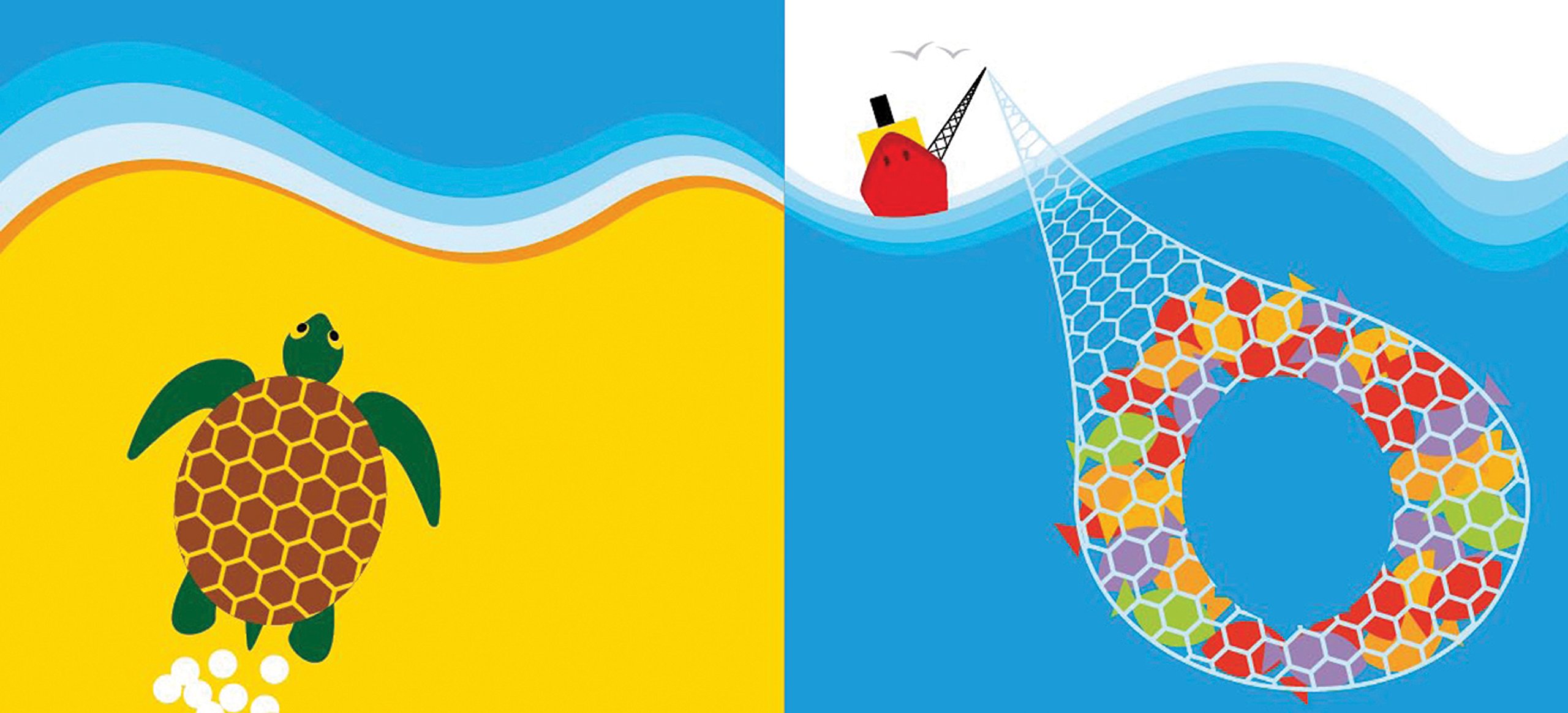
The fishing spread shows a trawler and net full of fish and a turtle on the right hand page. When we turn the acetate, however, only the turtle is rescued; the faceless, featureless fish are left in the net to suffer and die in order to become food. Removing the fishes' faces and features strips them of their individuality and suggests they are unable to feel in the same way as other animals. This may have been a conscious design decision in order to keep the book's minimal aesthetic consistent, but it is still an issue. Saving only the turtle may also be a fault of the design, as it is the similarity between the pattern on the turtle's shell and that of the net that makes the game effective. However the notion that we should save turtles, but not fishes (we are not even given the option to rescue the fishes) is highly speciesist.


The next spread confronts the reader with a similar dilemma, but this time there isn't even a distinction between species. We are presented with the choice to liberate some chickens from an overcrowded, grey, prison-like shed into an open field which is inhabited by a solitary rabbit. I believe the inclusion of the rabbit helps distinguish this field from a free-range farm, but I could be mistaken. When we turn the plastic page we rescue a handful of hens, but the majority remain in the factory farm and we have no option to save them. To me, this certainly doesn't imply abolition, but instead it suggests that not all animals can, or should, be free. It also implies that factory farming and the way we treat farmed animals is the problem, rather than the fact that we use them at all.  Again, this could be attributed to a design flaw - I believe it could have been possible to design a spread which allows the reader to liberate all of the chickens. It also would have been braver to show not just a factory farm, but a family farm, a humane farm in order to explain that all animal use is oppressive and exploitative.

Next we have the spread on shark fin soup. Although visually this is one of my favourite designs in the book (it is beautifully composed), shark fin soup is eaten by a small proportion of humans and again the emphasis is taken away from farmed animals and placed onto wild animals. There is often some degree of xenophobia in animal rights' criticism of shark fin soup - although that is not explicit here, it may enter into the discussion between parent and child.

One final criticism is of the last double page spread in the book which poses the question: "Which animals would you rescue?". Now of course one would hope that any child (or adult) would answer "all of them!" with glee and without hesitation. But the use of the word "which" implies that potential answers could include "some of them" or "none of them". Again this seems potentially speciesist and relies on parents' understanding of animal use to further explain the issues. In the non-vegan world we live in, this could result in speciesist conclusions to be drawn, particularly in the examples analysed above.

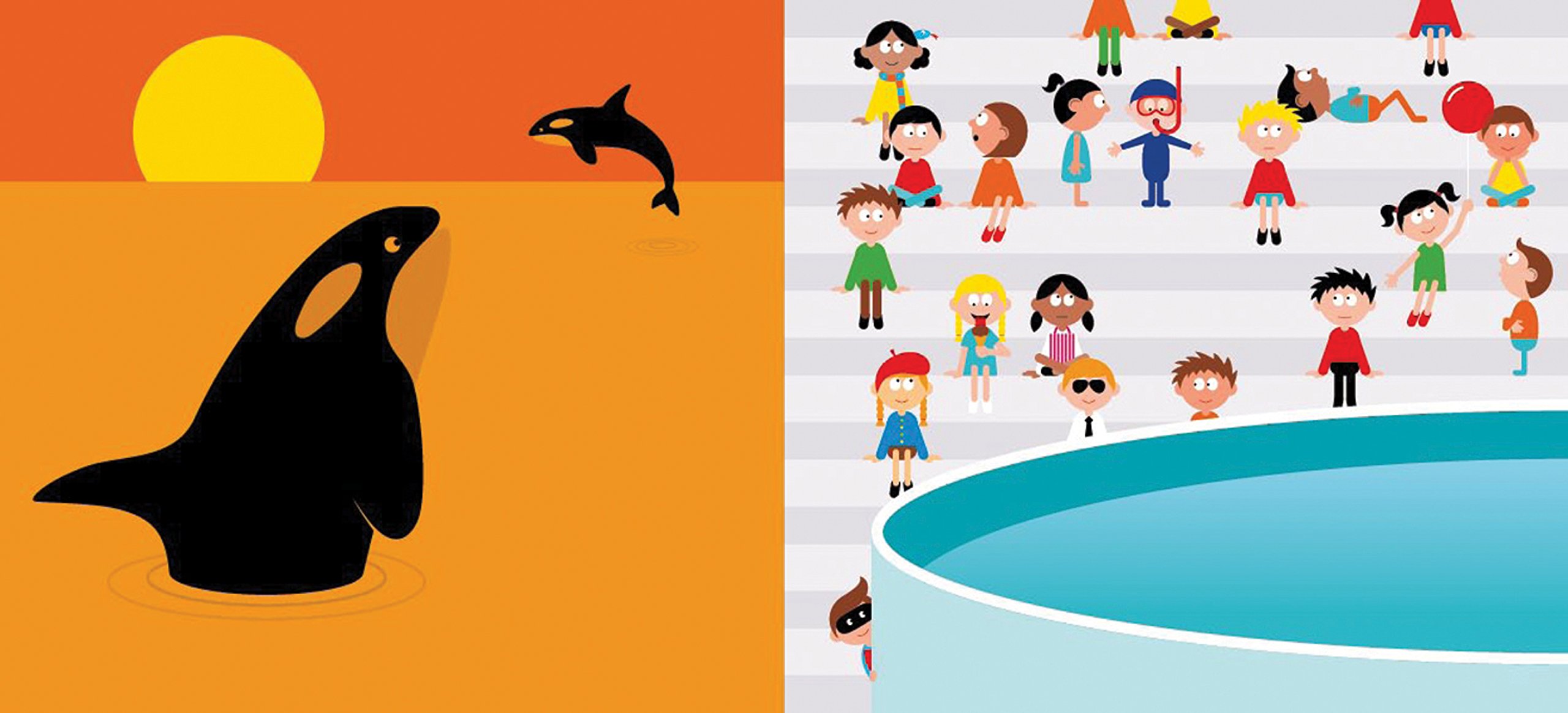
One key positive is the way each spread is concerned with animals as individuals (aside from the fishes in the net) and the focus is on their experiences, from their point of view. This helps us to empathise and realise that animals exist for their own reasons, not for human gain. The people the Seaworld-style aquarium look perfectly happy even after the whale is liberated; the glamorous  woman still looks fashionable, comfortable and warm, even without her fox fur stole; life without animal exploitation is neither limiting nor deprived.


Conceptually the book is highly inventive, there are some very clever uses of the format and the bold artwork makes it visually very successful. Turning the pages is a fun and engaging way to approach difficult subjects which are seldom confronted in picture books. Although the omission of more examples of farmed animals is a missed opportunity, and there are some disappointing displays of speciesism, I do think that this book succeeds in allowing the reader to question why we use animals in certain ways. Being almost wordless helps children to draw their own conclusions, rather than being told what is right or wrong. I'm sure the book will provoke many thoughtful conversations between parents and children, perhaps even allowing parents to question their own animal use in more depth. I would be keen to see another in the series that focuses purely on farmed animals as it is clear that the Born Free Foundation's focus on conservation has taken centre stage here. Despite its flaws, I would recommend this book to other vegans and to those looking to explain animal issues to young children.

See the trailer for the book below:

‘Animal Rescue’ by Patrick George from PatrickGeorge on Vimeo.

Monday, 22 June 2015

"Another victory for the animals"


When animal "rights" groups and organisations claim that there has been a "victory for the animals" I can't help but shudder at the blatant speciesism on display. The phrase is used any time a single-issue campaign appears to have had some effect - from pressuring a fancy restaurant to remove foie gras from it's menu, to international bans on cosmetic animal testing. Now, don't get me wrong, I'm always glad to hear when fewer animals are being used for human gain. However to suggest that any of these things is a "victory for animals" is insulting. How is removing foie gras a victory for the cows, pigs, chickens and fishes whose body parts will most likely replace a duck's liver on the dinner plate? Equally, a ban on cosmetic testing suggests that testing on animals for other reasons is morally acceptable.

But there's another reason I find this type of victorious declaration unpalatable: money. It feels like these organisations are exploiting the generosity of people with good intentions by pandering for donations at any given opportunity. Francione has touched upon the subject many times and sums it up rather nicely "... single-issue campaigns (and welfare reform campaigns generally) are nothing but business opportunities for the large groups. They have nothing to do with helping animals." These charities choose to focus on single issues, with short-term, accessible targets in order to declare victory as often as possible and use each "victory" as a marketing strategy. The campaigns are catered specifically to non-vegan, "animal-loving", speciesist supporters in order to maximise donations, rather than aiming for real change or, God forbid, asking their supporters to go vegan. But when becoming vegan is the very least we can do to help end animal exploitation, surely we should be promoting nothing less than veganism, and celebrating the creation of each new (abolitionist) vegan as real victories.

Tuesday, 9 June 2015

Our Children and Other Animals

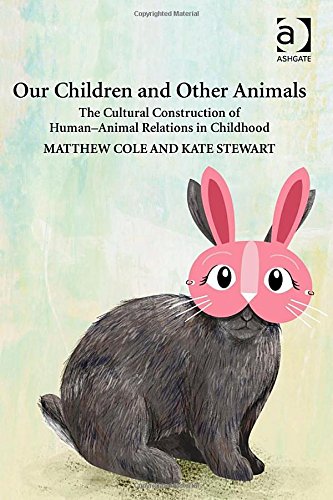
In 2013 I was thrilled to be asked to illustrate an academic book about children, animals and media. Written by Matthew Cole and Kate Stewart, the book explores the subtle ways that seemingly innocuous books, games and other types of media can affect the way children view animals. Having a huge interest in both children's literature and animal rights, this was right up my street and it was a joy working with Matthew and Kate due to their enthusiasm for the project too.

The book was published in November (find out more here) and I am excited to show you the front cover plus some of my favourite illustrations from the book!


Sunday, 20 April 2014

Vegan clothing

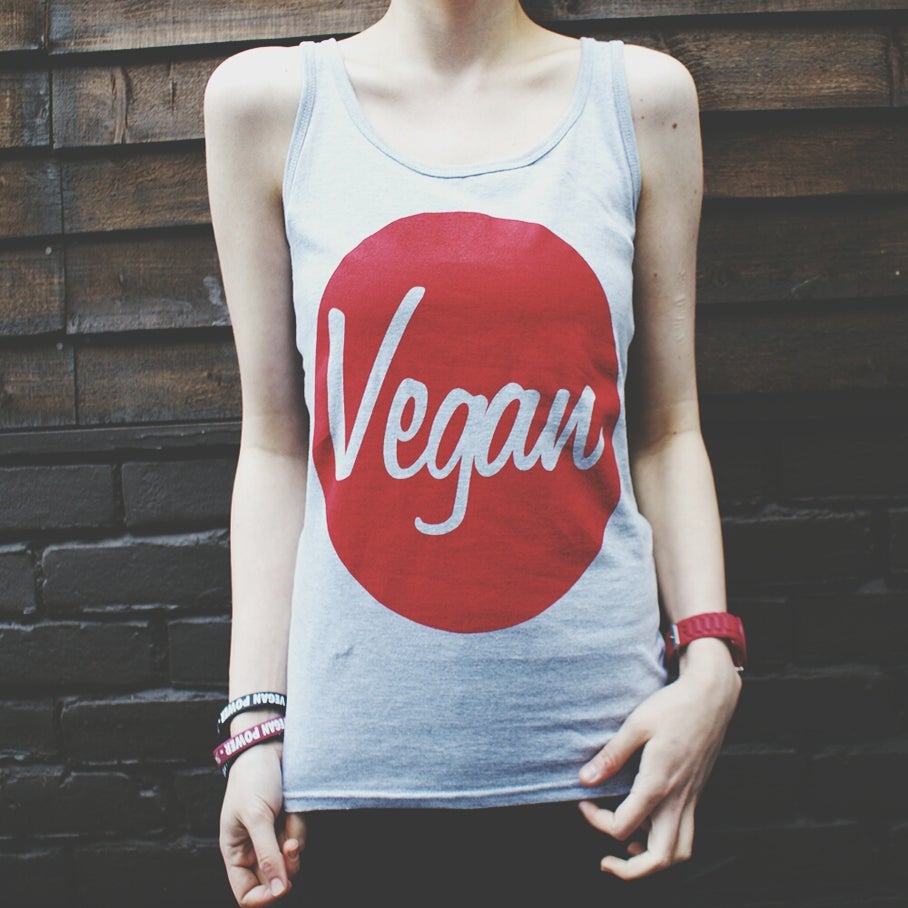
Vegan t-shirts can be a great way to get a conversation started, especially if the tees are awesome designs in their own right. Here's a selection of my favourite vegan clothing options on the market and where to buy them.


£18.60 (approx $31)

Sometimes it's best just to keep things simple. There's no ambiguity here, just a powerful statement about your ethical alignment. This UK company also make tote bags and wrist bands, generally aimed at younger vegans. They also offer free worldwide shipping which is pretty handy wherever you are.


£20 (approx $34)

Probably the most ethical choice of all the shirts I've featured, this tee is fairtrade, organic cotton, printed in the UK with environmentally friendly water-based inks. And all of the profits go to Mino Valley Farm Sanctuary in Northern Spain. So quadruple bonus points for ethics. It also uses typography and a limited palette in a rather lovely way to get its message across.


$25 (approx £15)

This utterly adorable tank top has a lovely, positive message and who can resist a tank with bunnies on it?! Perfect for starting peaceful, thoughtful vegan conversation, this design can also be found on t-shirts (including men's sizes), long-sleeved tops, hoodies, button badges and as a print.


$35 (approx £21)

Who can argue against such a catchy rhyming slogan? I certainly can't. Combine this with a neat colour scheme and distressed effect print and you've got a pretty sweet addition to any wardrobe. Herbivore clothing also never use suppliers that use sweatshops so they get a bonus point for human rights ethics too.


Green Dino Kale from V Apparel
$20 (approx £12)

Dinosaurs and kale, two of my favourite things, brought together on a gorgeously bright green organic cotton tee. I also adore the way the model wears this with a (vegan) belt and rolled up sleeves - right on trend. This top is also on sale at the moment so grab yourself a bargain and show off your kale love at the same time.

Thursday, 9 January 2014

The Scarecrow


I stumbled across this video on the internet today and decided to share it for a number of reasons. First of all, as an illustrator I am a huge sucker for anything that's visually engaging. The animation in this video is by Moonbot Studios and it is simply gorgeous, using a lovely colour palette and great character design. And on first impressions it seems to be a decent commentary on animal farming too - what more could you want? Well there is certainly one rather large issue that I have with it.

The film follows a scarecrow who is being shown the cruelties of farctory farming while the humans blindly eat animal products without knowing their true origin. This draws a comparison with the way real humans can often be blissfully ignorant when it comes to consumption. The scarecrow, frustrated and upset by the way the animals are raised, then rides home where he discovers a single pepper on a plant in his garden. You can practically see his mind make the connection right there. So off goes the scarecrow, truck laden with delicious, nutritious vegetables to present an alternative to the meat-heavy diet in his world, in the same way vegan activists take to the streets with their plant-based treats and leaflets. The phrase 'Cultivate a better world' is even hung on a banner above his stall as if to emphasise his non-violent, activist stance. Pretty neat animal rights campaign right there, huh? Unfortunately not.

The video, along with the accompanying app game, was funded by Chipotle Mexican Grill in the US to promote their welfarist stance on food production, i.e. happy exploitation. Discovering this after watching a three minute tale of empowerment through education left me with a bad taste in my mouth. If we want to make informed choices about our food we need to analyse all levels of production, including slaughter. Instead companies like this reinforce the idea that it is ok, or rather desirable, to exploit and kill animals as long they are "raised outside or in deeply bedded pens, are never given antibiotics and are fed a vegetarian diet." But then, what do you expect from a large corporation whose most profitable products are animal-based?

I'm just frustrated that such a great quality film couldn't have been put to better use. It frustrates me that animal-based industries can afford to make these films as advertisement for their unnecessary products and as welfarist propaganda. If this film had ended with the phrase 'Go vegan' and a few links to resources it would have had a profoundly different effect.

Sunday, 8 December 2013

Uwe Heidschötter - The Meaning of Life

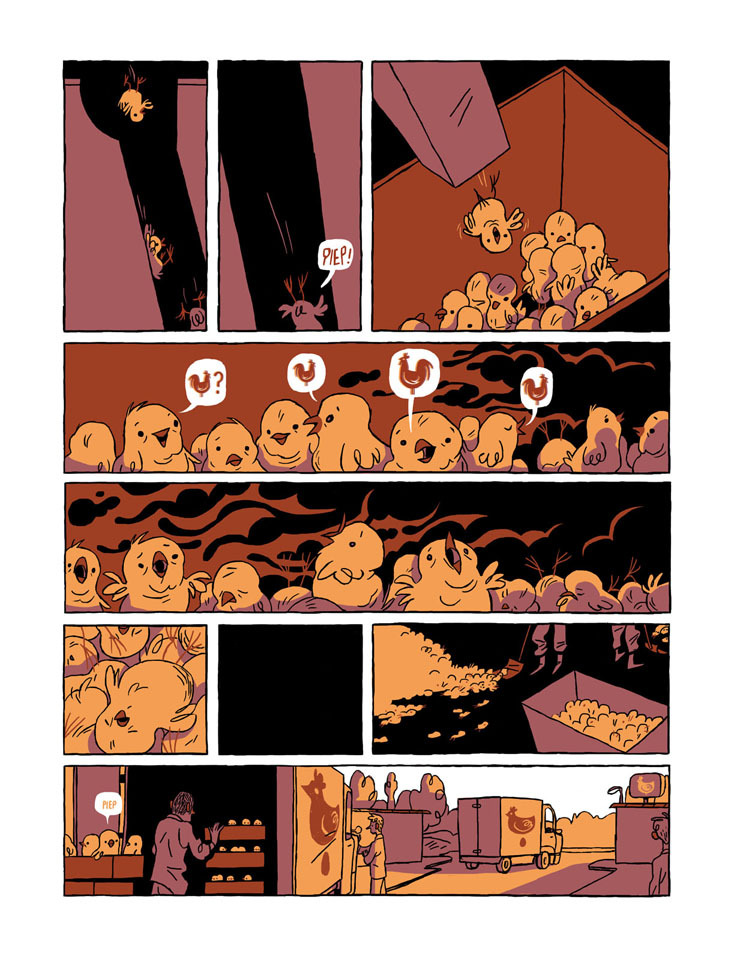
I came across this beautifully drawn comic on Tumblr and just had to share it over here because it involves my two favourite things (illustration and veganism) but also my least favourite thing (cruelty to innocent beings). The stark use of black and lack of dialogue gives the comic an ominous feel whilst hinting at the way farmed animals are 'silenced' and hidden from the public consciousness. This comic is exactly the kind of thing the vegan movement needs: intelligent, thought-provoking imagery that provides information clearly and without propaganda tactics.
If you'd like to find out more about the egg industry click here. If this comic explains it enough then please go vegan.

Monday, 4 November 2013

"Debate"


As a vegan, and a vegetarian previously, I have ended up in many heated debates about my food and lifestyle choices. Most of the time it begins with a question as to why I’m vegan, to which I simply reply that I think it’s wrong to hurt animals. General discussion ensues; I talk of the cruelties of the meat and dairy industries while the other person becomes increasingly defensive of their actions. Phrases like “But we evolved to eat meat” and “I only buy humanely sourced, organic meat anyway” are thrown around, eventually devolving into “You vegans think you’re so much better than everyone else” and a plethora of other personal insults. I have been described as militant, preachy, irrational amongst other things despite approaching the topic calmly and with facts and figures to back myself up.

Rather than reacting appropriately to the information being given, the non-vegan reacts to the debate itself, which becomes increasingly aggressive. They become defensive when they realize their lifelong values are being questioned and desperately attempt to justify their actions. When these attempts are debunked by simple logic or nutritional information the last resort is to insult vegans personally, in an attempt to discredit veganism and further justify their position. This kind of backlash is a perfect example of how meat-eaters can sometimes perceive vegans as a threat – a threat to their comfortable lifestyles and blissful ignorance. However rather than shooting the messenger, perhaps this kind of anger needs to be directed at the unethical industries that cause the discussion in the first place.

Friday, 1 November 2013

It's World Vegan Day!


To celebrate World Vegan Day, which kickstarts World Vegan Month, I'm offering my Vegan For A Day booklet as a free download! Inside you'll find some of the recipes included on this blog plus ideas for other meals if you're new to vegan food. I became vegan during World Vegan Month two years ago, maybe this year you'll do the same.

Click here to download Vegan For A Day.

Monday, 28 October 2013

The Spotless Leopard - Review


Two weeks ago at the East Midlands Vegan Festival I had the pleasure of tasting all kinds of delightful vegan food from a wide variety of stalls. But my favourite sample of the entire day actually came from a van: The Spotless Leopard, a vegan catering van normally based in Bristol. Their menu typically includes a good selection of savoury food including vegetable tarts, seitan sandwiches and veggie burgers, all at affordable prices. And if you fancy something sweet then I would highly recommend trying one of the mostly raw cheesecakes on offer.

I went for the Spiced Peanut Butter Cashew Cheesecake - pretty much all of my favourite ingredients in one dessert. The filling was light and delicate with a very creamy texture which contrasted perfectly with the chunkier, nutty base. The addition of spices such as nutmeg and cinnamon added a touch of autumn while the whipped coconut cream topping was luxurious but not excessive. One thing I loved about this dish was that it wasn't overly sweet, instead making the most of different textures and flavour combinations. The company also offer a pumpkin version of this dessert which I can't wait to try.


The advantage of using a van is that The Spotless Leopard can bring vegan food to different locations, mainly in the South West but also further afield. You can find out where the van will be visiting next by clicking here. If catering vans aren't your thing, you can still try the delicious food at The Spotless Leopard's vegan pop-up restaurant in Bristol on the 6th of December, which you can find out more about here.

Like The Spotless Leopard on Facebook here and follow them on Twitter here.

Saturday, 26 October 2013

Banksy - 'Sirens of the Lambs'

I've learnt a lot about Banksy since moving to Bristol where the population seems to be divided between adoration and bitterness for the world-famous street artist. But then it's hardly surprising since controversy is integral to much of Banksy's work. Most recently he has been sparking conversation through his New York residency where he has produced work in his trademark stencil technique alongside several moving installations. One of these, 'Sirens of the Lambs', took to the streets of New York's meatpacking district on October 11th before touring the city for two more weeks.
 
A video, posted on the artist's website, Better Out Than In, shows a truck containing squeaking animal puppets and labelled 'Farm Fresh Meats' driving around, as well as reactions from members of the public. As a vegan, I'm always interested to see how people react when confronted with questions about their food choices and this video displays some common examples. A child runs away in horror like many people do when confronted with animal slaughter videos. Others try to touch the cuddly animals without fully understanding the context, like those who coo over farmed animals in fields without considering their inevitable and impending deaths. The butchers are shown to be laughing at it while plenty of passers-by just ignore it. There are also a handful of people who watch with sympathy and perhaps despair.
 
The choice of puppets is interesting; they reflect sentimentality, something which is often exploited by animal rights campaigns (find example) whilst also referring to childhood and the destruction of innocence. Even the physical nature of the puppets is important, suggesting that real animals have been reduced to nothing more than products to be manipulated by humans. The puppeteers have total control over these animals, ‘bringing them to life’ as such, which reflects industrial breeding and the idea of animals as commodities. This point is particularly interesting with regards to veganism because one of the core principles is that animals are not ours to use or exploit in any way.

It is not the puppets that I find most disturbing about this installation, but the haunting sound of the ‘sirens’. The shrill, loud noise clearly helps draw attention to the piece - perhaps the sounds made by real animals in this district have simply become part of the everyday cacophony. It's almost like a cry for help, alarming the world of farmed animals desperate struggle.

As with all of Banksy’s work this piece is intended to create a reaction, generate conversation and to allow people to question what society tells us. The question now is how do vegan campaigners successfully do the same thing?


Wednesday, 23 October 2013

Tofu Scramble

This is one of my favourite meals that I've discovered since being vegan. I was never a big fan of scrambled eggs but I LOVE scrambled tofu, probably because it is so versatile and the spices help give it real flavour, rather than just tasting eggy. You can mix up the vegetables and make this into a fabulous breakfast, lunch or dinner.


Tuesday, 1 October 2013

New products!

I've been busy working on some new designs to be printed on tote bags (what better way to make a statement!) for the East Midlands Vegan Festival where I will be having a stall to sell some illustrated goodies! I'll be selling pocket mirrors, badges, zines, recipe books and of course these bags.


If you can't make it down to the festival I'll be opening my Etsy shop in mid-October where you'll be able to purchase all of the products I have available!

Thursday, 15 August 2013

Real Foods Review

The lovely folks at Realfoods.co.uk asked me to review a couple of their new products so here it is, my first blog review! Both products are gluten-free porridges from Alara, a Scottish company who pride themselves on their organic status and traditional stone-milling process. Alara produce a range of cereals that are suitable for coeliacs and affordably priced, without compromising on their environmental status. Almost all of the cereals in the range are vegan too, with the exception of Crunchy Oats Granola which contains honey. Additionally their packaging is beautifully designed, giving a good indication of the quality and organic nature of the products.

First up is their luxurious porridge, a mix of rice, millet, buckwheat and golden linseeds. This porridge is particularly good for those with coeliac disease as well as sensitivity to oats because of its use of alternative grains. This also gives the porridge a much creamier texture than regular oats, however it requires a little more liquid to get the porridge to the right consistency. The addition of the linseeds is a lovely touch, adding texture and a slightly nutty taste whilst also bumping up the nutritional content with iron and omega 3. Similarly, millet and buckwheat are both high in iron and calcium as well as other essential vitamins and minerals so this is an excellent breakfast for vegans or anyone trying to eat a balanced diet. I served mine with Koko dairy-free milk for a hint of coconut along with a sliced banana and a sprinkle of cinnamon - delicious! Despite being marketed as a luxury product, at £2.60 for 500g this porridge is within the average price range for gluten-free cereals but with the added advantage of being 100% organic, which normally increases the price. This makes it great value for money so I would definitely recommend this for everyday breakfasts.

Up next is the traditional Scottish oats. Even before cooking it is clear that these oats are high quality - they are large, thick grains with a soft golden colour - and it is difficult to tell them apart from non-gluten-free oats. This makes them wonderful for porridge (try them with hazelnut milk and a handful of chopped dates) but also for baking. Using these in flapjacks, oatmeal cookies or on top of an apple crumble is surely a great way to get the health benefits of oats whilst indulging in something sweet. The price of these oats is considerably higher than the luxurious porridge, £3.95 for 500g, so perhaps better suited to baking or those with a higher budget.

Overall these products were both tasty and nutritious which in my books (and the bear's) is:


Tuesday, 13 August 2013

Cool Cat Smoothie

A suitably summery recipe for all ages. Trying out a more child-friendly approach in my illustrative work - hope you like it!


Friday, 28 June 2013

East Midlands Vegan Festival

My friends over at VOLE are organising the East Midlands Vegan Festival 2013 and asked me to do the logo and fliers!  It was decided that animals and the environment should be the focus as these are the most compelling reasons to become vegan, whilst the cupcakes reference Ruth's wonderful baking and the "normal" foods vegans can enjoy.  Graphic design is not my forte but it's good to have a challenge and help the vegan cause at the same time.  I certainly had a lot of fun doing it and can't wait to produce recipe leaflets for visitors to take away.  You can find out more about the event here.


Wednesday, 26 June 2013

Easy Chilli


Hello and welcome to The Illustrated Vegan, a blog combining the two main passions of a twenty one year old punk.  Here you'll find all sorts of information about veganism, from food to fashion, all delightfully decorated to make it all the more appealing.  And what better way to launch the blog with my most fail safe vegan recipe: chilli - yum!